English Biscuit Manufacturers - Peek Freans

THE OPPORTUNITY
Across South Asia, cake rusk isn't a snack decision, it's an expected staple. It sits beside the chai, often served or ritually taken out. Now in South Asian homes abroad, that same fluency doesn't travel automatically. The rusk may still sit on the shelves of desi grocers, but the ritual around it has of course shifted, and it changes again between the generation that grew up dunking and the generation that grew up observing.
That gap is where most heritage launches go wrong. The assumption is that diaspora demand is nostalgia demand and that the memory sells. We read between the lines, understanding who reaches for the box on a Tuesday, what the packaging has to signal in an unfamiliar aisle, or which market is actually ready first.
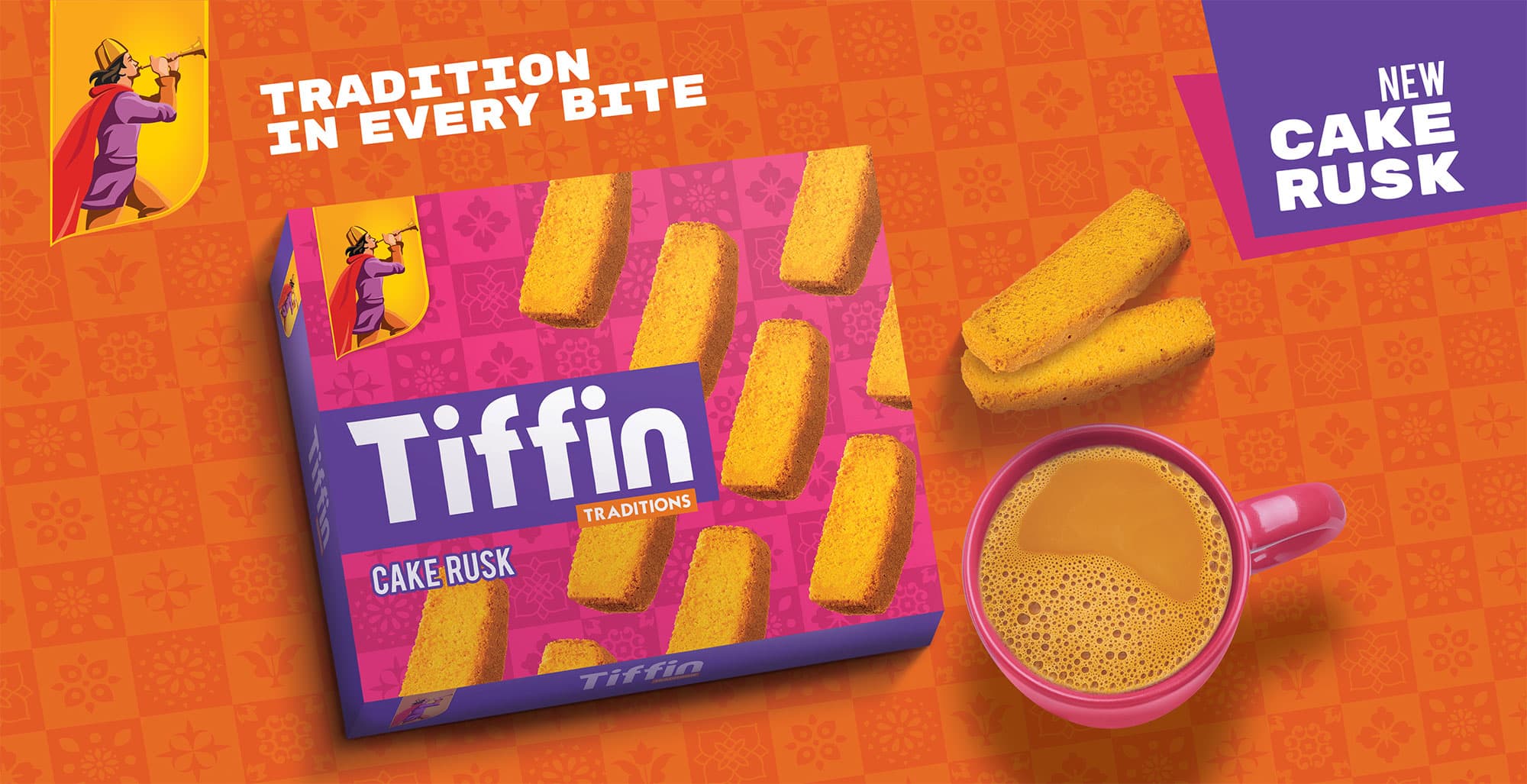
EBM — Pakistan's leading snack company — was preparing to take Tiffin Traditions, under its Peek Freans brand, into international markets with a significant South Asian presence. They came to Aam to answer the question underneath the launch: what does cake rusk actually mean to South Asians living abroad, and what turns that meaning into a purchase? We led the research end to end: design, fieldwork across five markets, analysis, and the strategic translation that fed directly into how the brand launched.
THE APPROACH — RESEARCH STRATEGY
You can't survey your way to a ritual. Habits this embedded are things people perform without narrating, so we built a qualitative study designed to get underneath the stated answer and into the actual behaviour.
PILLAR ONE — BUILD THE GUIDE AROUND THE RITUAL, NOT THE PRODUCT
We didn't open by asking people what they thought of cake rusk. We opened with tea. The discussion guides worked outward from cultural identity and everyday snack and tea-time rituals into packaging response and shopper behavior — so the product showed up inside a real routine rather than as a concept on a screen.
PILLAR TWO — SAMPLE FOR THE DIVIDES THAT MATTER
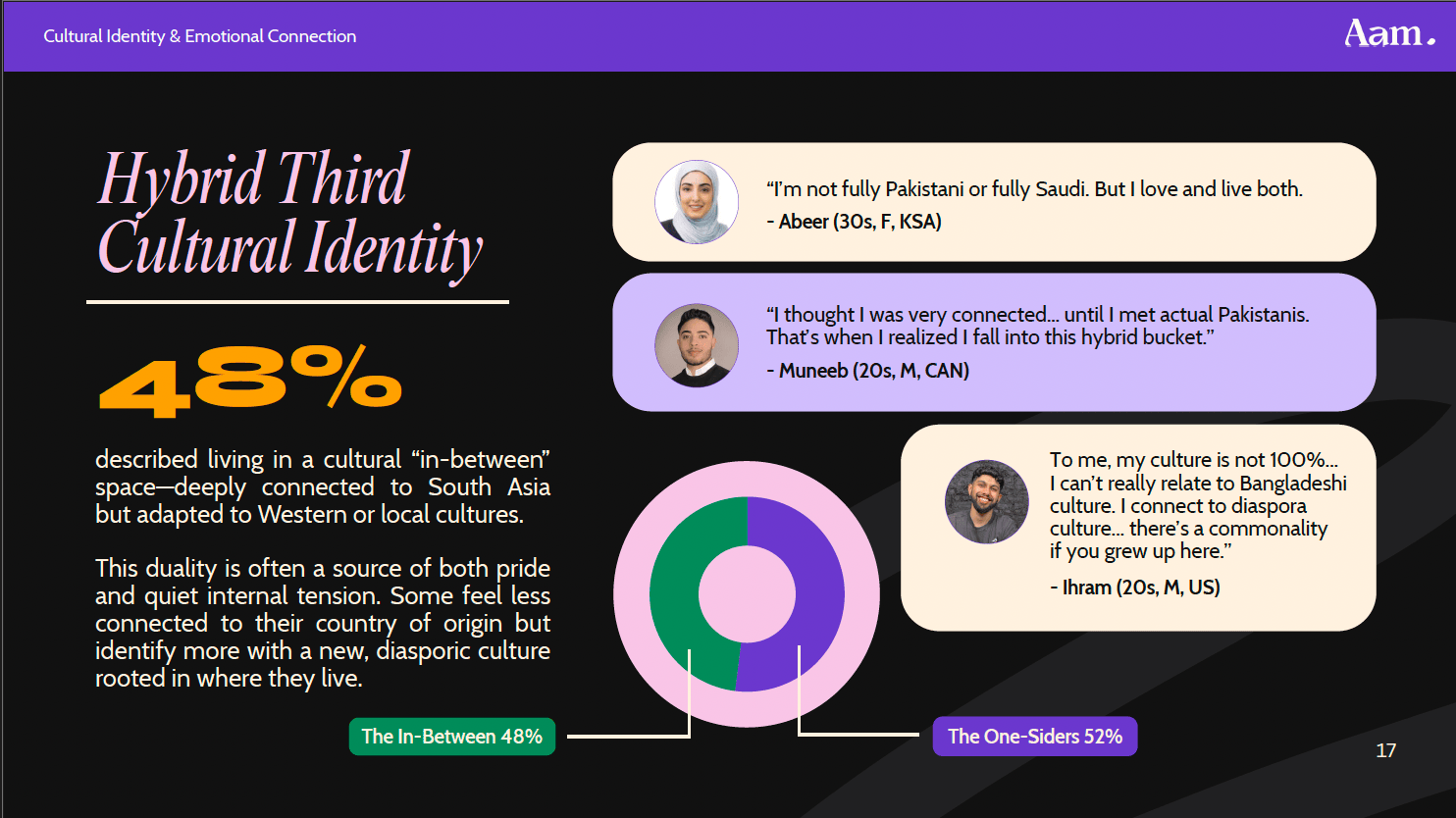
The interesting differences in a diaspora category are rarely geographic alone. We designed the sample across the fault lines that actually shape behavior: first- and second-generation consumers, Pakistani, Indian and Bangladeshi heritage, men and women, twenties through fifties, spread across five markets — so EBM could see where the ritual held, where it had shifted, and where it had been rebuilt into something new.
PILLAR THREE — TRANSLATE, DON'T JUST REPORT
Research that stops at findings leaves the hard part to the client. We built the study backwards from the three decisions EBM had to make — how to position the brand, how the pack should look, and which market to enter first — so every insight landed against a live choice rather than sitting in an appendix.
WHAT WE DID
Aam ran the study end to end — from the first discussion guide to the strategic recommendations EBM launched on. Here's what that looked like.
RESEARCH DESIGN
We scoped and designed the full qualitative program: the objectives, the sample frame across five markets and three heritages, the recruitment criteria, and the discussion guides. Those guides were built to cover cultural identity, snack and tea-time rituals, packaging feedback and shopper behaviour — four territories chosen because together they explain not just whether someone likes the product, but when, where, and with whom they'd actually eat it. The design was qualitative and directional by intent, built for depth of understanding rather than statistical projection, and we were explicit with EBM about that from the outset.
MULTI-MARKET FIELDWORK
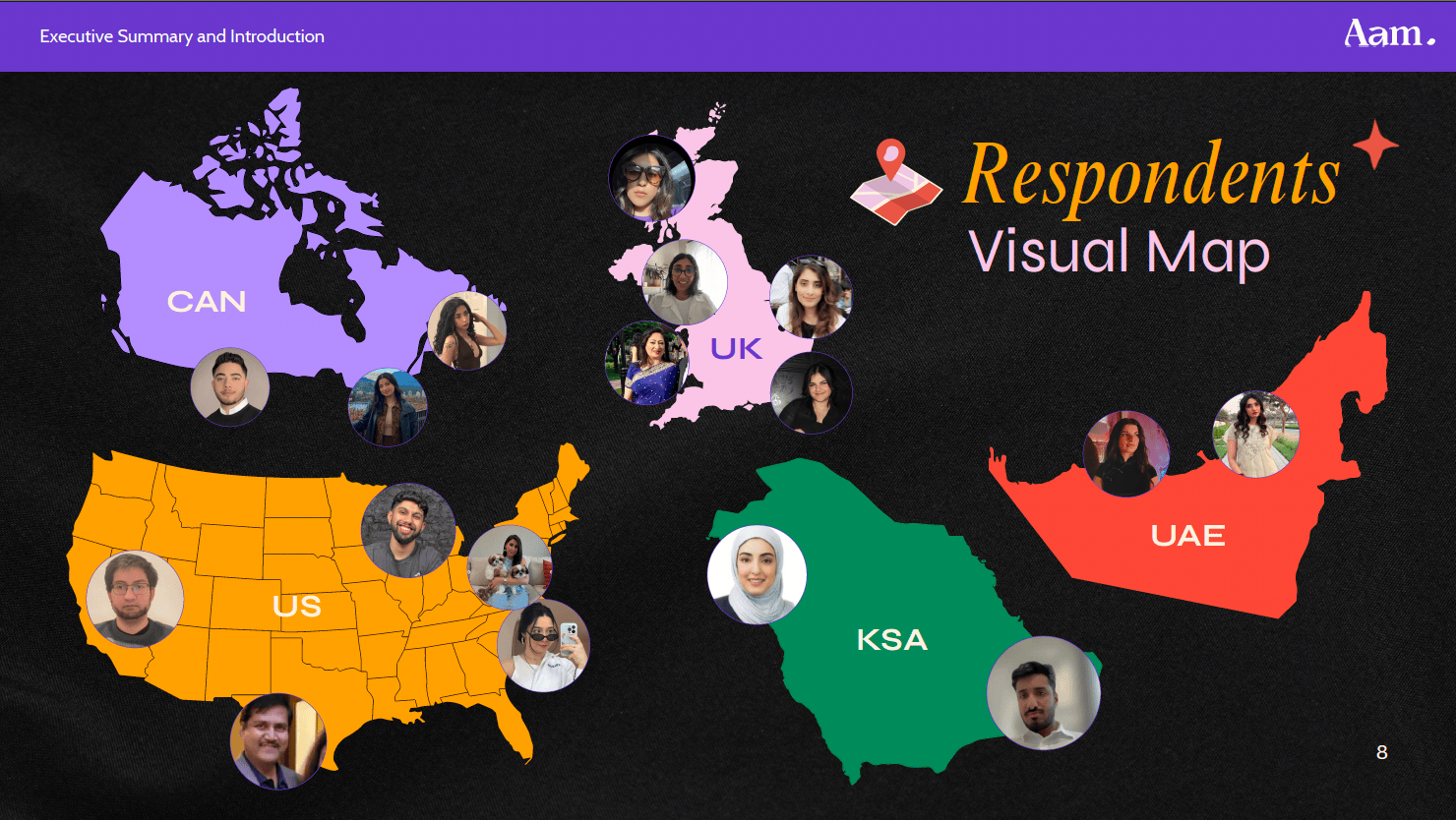
Aam conducted 17 in-depth interviews across the United States, Canada, the United Kingdom, the United Arab Emirates and the Kingdom of Saudi Arabia — Pakistani, Indian and Bangladeshi heritage consumers, male and female, spanning their twenties to their fifties. Every interview was moderated by a team that speaks the cultural language of the room, which is what allows a conversation about tea to become a conversation about belonging.
CULTURAL ANALYSIS
We analyzed the emotional and behavioral dynamics of rusk consumption across the sample, reading for the patterns that held across markets and the ones that split along generational lines, and separating what people said about heritage from what their routines revealed. The output was a structured read of how the ritual travels, where it weakens, and what has to be true for a heritage product to earn a place in a household that has moved on.
STRATEGIC TRANSLATION
We converted the findings into the decisions the launch depended on: a brand positioning that could speak to first- and second-generation consumers without alienating either, packaging direction grounded in what consumers actually responded to on shelf, and a prioritised view of which markets and audiences to enter first. Delivered as a single report built to be used by marketing, design and commercial teams alike.
THE RESULT
5 markets — US, UK, Canada, UAE, KSA
17 in-depth interviews
3 heritages, two generations
8 weeks, end to end
The research gave EBM a cultural read how the tea-time ritual actually behaves once it leaves home, how differently first- and second-generation consumers signal heritage through what they buy, which cues a pack has to carry to earn trial in an unfamiliar aisle, and where the product is discovered in the first place.
That analysis directly informed three decisions. It provided the blueprint for a brand repositioning built to resonate with both generations rather than defaulting to the older one. It led to a complete re-strategising of the packaging, so the design carried the cues needed to drive in-store trial and purchase. And it identified which markets were most accessible for an initial launch, letting EBM prioritize geographic entry points and target audiences with evidence instead of instinct.
Beyond the launch itself, EBM came away with something reusable: a cultural framework for the diaspora consumer that outlives one product and a way of reading its export markets that applies to everything Peek Freans sends abroad next.
PROJECT CREDITS
Strategy & Project Management
Afshan Nasseri, Mariam Shahab, Aditi Bhandari, Masuma Ali
Presentation Design
Adinda Shafira